Unmasking Beneficial Ownership: Strengthening Transparency and Accountability in Tanzania’s Extractive Industries
Policy Brief
2024
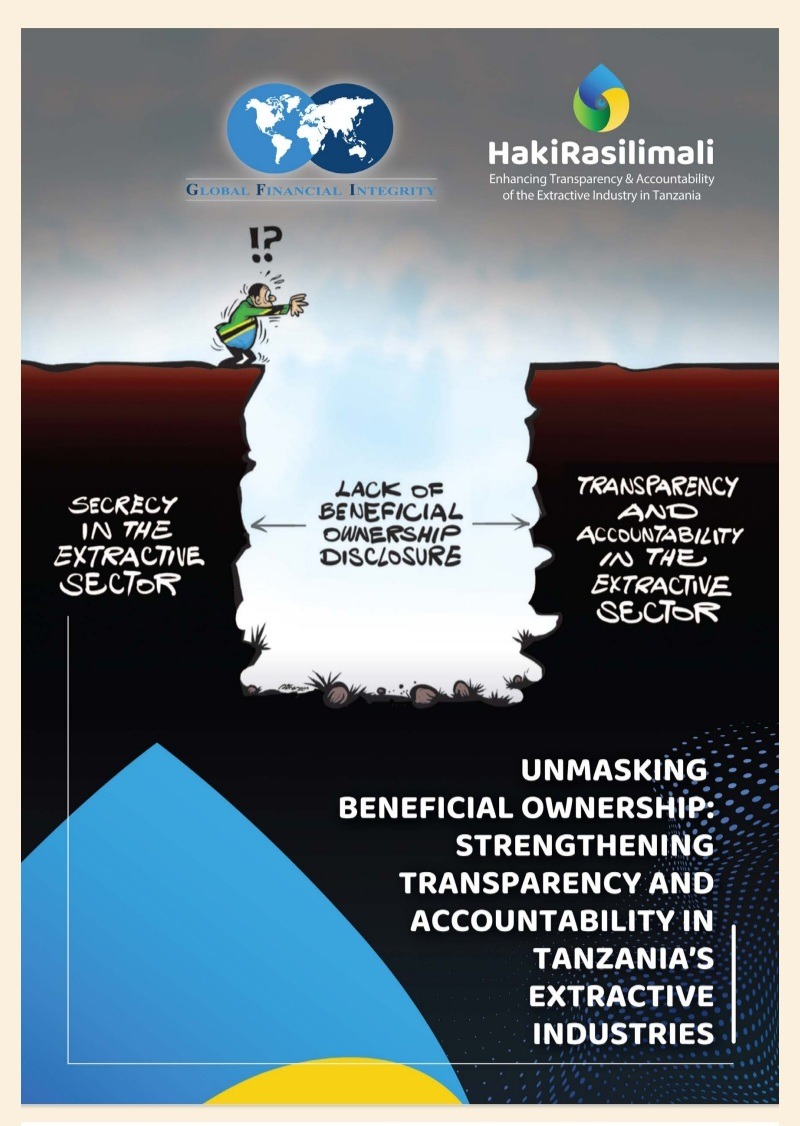
Read the Briefing: https://www.hakirasilimali.or.tz/storage/wp-content/uploads/2024/11/HakiRasilimali-BO-Analysis-Booklet-•-Final.pdf
Tanzania's abundance of extractive resources has bestowed it with a distinctive reputation. Internationally recognized for its exclusive Tanzanite reserves, the country also boasts deposits of various minerals, such as gold, diamonds, coal, nickel, iron, uranium, ruby, and graphite.
The extractive industry can threaten socio-economic development and human rights in communities. Positive outcomes benefit the whole country, yet negative impacts often affect nearby communities.
On March 16, 2023, Deputy Minister of Minerals, Dr. Steven Kiruswa, launched the Tanzanian Local Content and CSR system, highlighting substantial achievements in the mining sector, such as a 131% increase in Tanzanian mining employment from 2018 to 2022, with 15,341 jobs in 2022, along with a 97.4% domestic procurement rate in 2022, and an 81% growth in mining service providers, which increased from 623 in 2018 to 1,386 in 2022. Moreover, 8,066 Tanzanians received mining sector training in 2022, amounting to 3.4 billion Tanzanian shillings.
Tanzania's abundance of extractive resources has bestowed it with a distinctive reputation. Internationally recognized for its exclusive Tanzanite reserves, the country also boasts deposits of various minerals, such as gold, diamonds, coal, nickel, iron, uranium, ruby, and graphite.
The extractive industry can threaten socio-economic development and human rights in communities. Positive outcomes benefit the whole country, yet negative impacts often affect nearby communities.
On March 16, 2023, Deputy Minister of Minerals, Dr. Steven Kiruswa, launched the Tanzanian Local Content and CSR system, highlighting substantial achievements in the mining sector, such as a 131% increase in Tanzanian mining employment from 2018 to 2022, with 15,341 jobs in 2022, along with a 97.4% domestic procurement rate in 2022, and an 81% growth in mining service providers, which increased from 623 in 2018 to 1,386 in 2022. Moreover, 8,066 Tanzanians received mining sector training in 2022, amounting to 3.4 billion Tanzanian shillings.
Get This Resource
Publication Details
- Year
- 2024
- Published
- November 18, 2024
Resource Type
publication
Related Resources
Policy Brief
Policy Brief: Accelerating a Just and Inclusive Energy Transition in Tanzania
Tanzania's energy system is heavily reliant on fossil fuels, particularly natural gas, which accounts for over 50% of th...
2025
Read More